5. Embrace Ambiguity
In certainty, the future relieves us and in uncertainty it leaves us distraught. Certainty manifests in answers, solutions and conclusions.
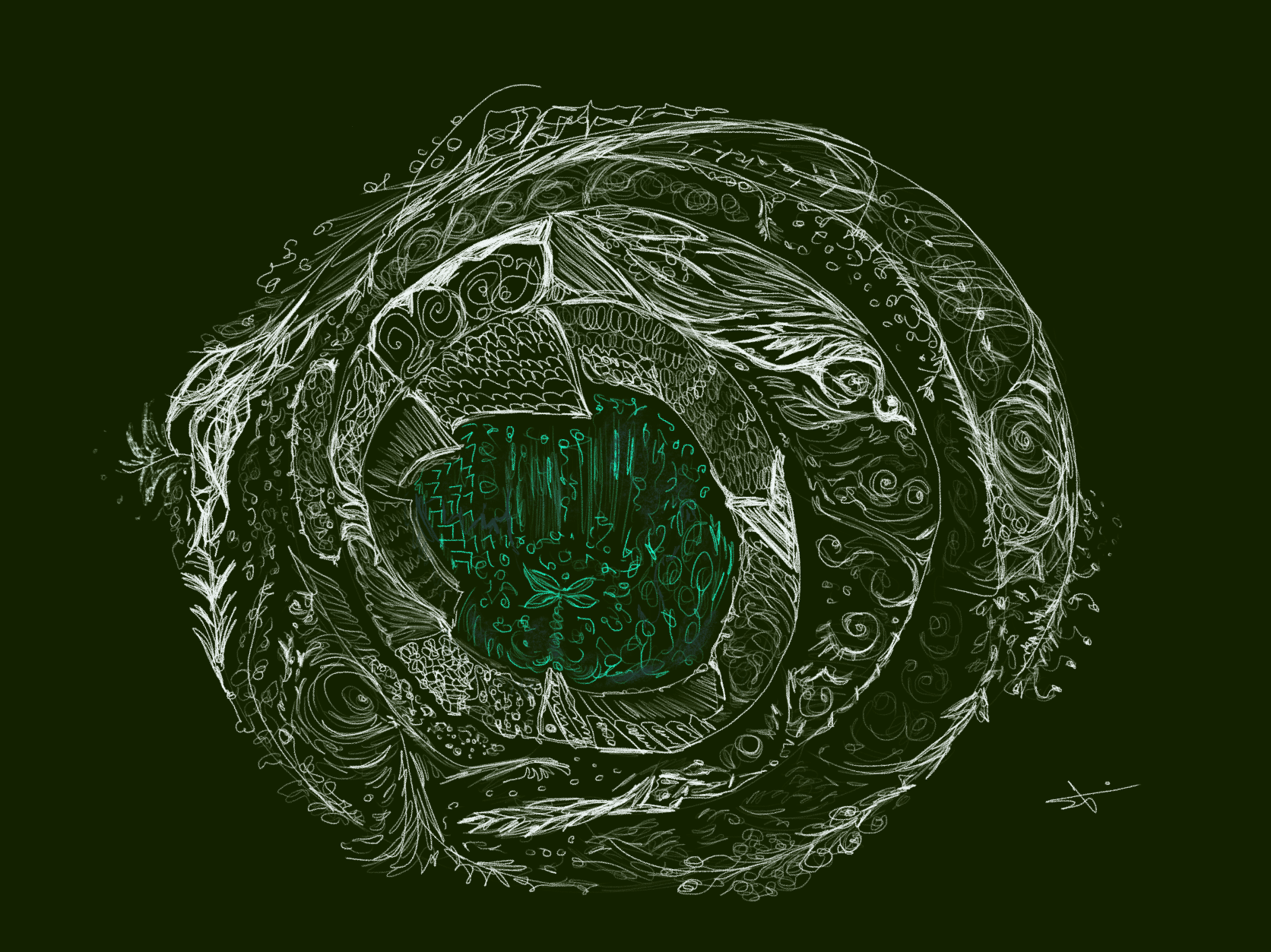
Abstract Drawing, Procreate on iPad Pro
Playback of one of the many drawings I did on my iPad Pro using Procreate. I never really know where I will end. I just let the drawing and the moment define the next step.
The result is always a surprise with sometimes recognizable drawings such as an owl and some entirely built on shapes and figures that are not easily mapped to a known object.
It’s very easy to say I can wrangle ambiguity. However, when you truly put the ego aside and accept these things, you’re going to be in a position to have the confidence to be comfortable with ambiguity. And that takes time and experience. It takes a pretty strong confidence in self but also support and backing. You can’t do it all yourself.
Is Strategy a Zero-Sum Game? | Roger Martin
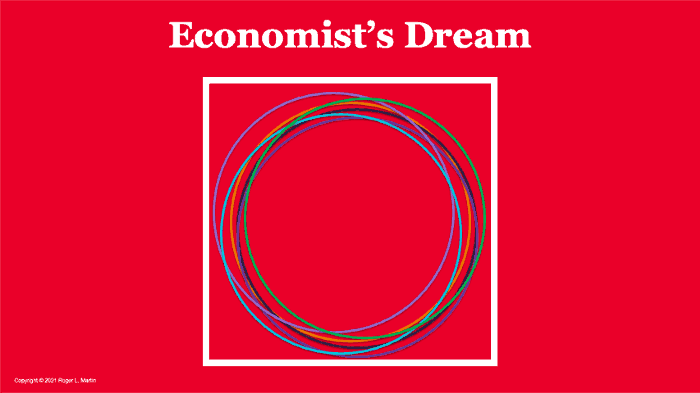
Economist Dream of having competition in a given space look like this, in which (for example) six competitors duke it out in almost identical WTPs, approximating perfect competition. Nobody wins — they just play.
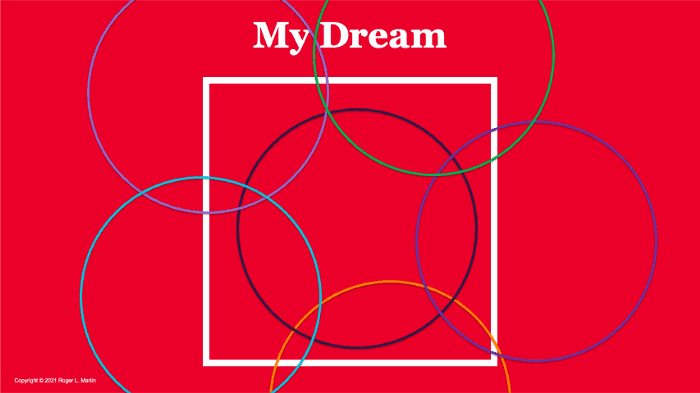
In My Dream, rather than compete head-to-head with the same WTPs and same/similar HTWs, the six competitors spread out and reduce their overlap. Each competitor wins in a somewhat different WTP. Many more customers get an offering that is perfect for them. Competition happens — but it the boundary territories at the intersections of the individual WTPs, rather than across each competitor’s entire WTP. That ensures that while the competition won’t be as intense as in the Economist’s Dream, it will still be meaningful.
If each company pursues a winning strategy in its carefully defined WTP, each can prosper and achieve a level of profitability that enables it to innovate and move the market forward on behalf of its customers.